Two quiet actives, one routine
Copper peptides and retinoids occupy very different places in the skincare conversation. Tretinoin is the loudest, most-studied retinoid — celebrated for its work on cell turnover, texture and tone. GHK-Cu is its calmer counterpart — a tiny copper-bound peptide studied for its supportive role in firmness and a softer-looking finish. Used thoughtfully, they can sit inside the same evening ritual.
Why layer them at all?
- GHK-Cu is associated with soothing, barrier-friendly signals in research.
- Tretinoin is unmatched for resurfacing, but can leave skin feeling fragile.
- Layering pairs the firmness story of copper peptides with the renewal story of retinoids — a quietly complementary duo.
The order matters
Think of layering as a gentle conversation, not a stack. Always apply to clean, dry skin — dampness can drive tretinoin deeper than intended.
- Cleanse and dry the skin fully. Wait a few minutes if your skin is sensitive.
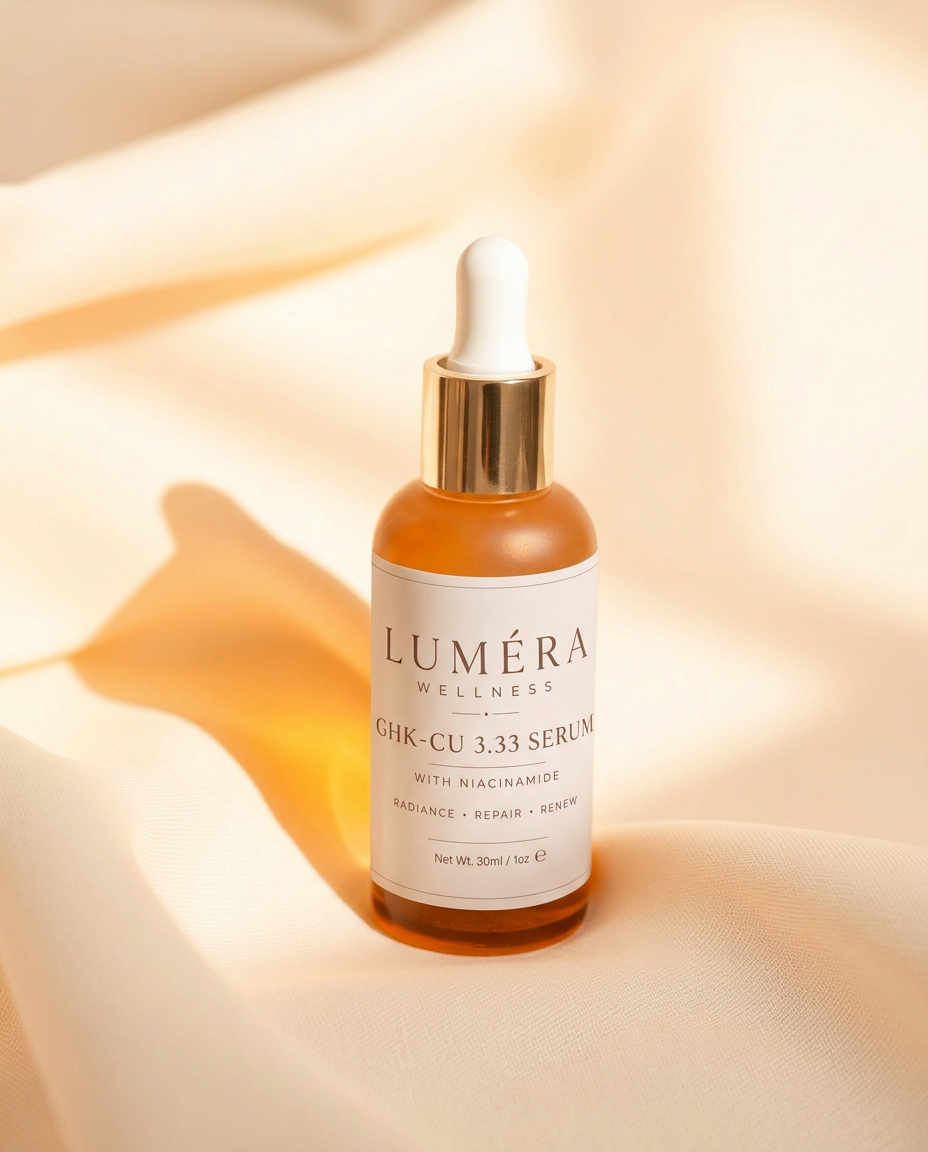
- Press 3–4 drops of GHK-Cu serum into the face and neck.
- Let the serum settle for 60 seconds — no rush.
- Apply a pea-sized amount of tretinoin across the whole face.
- Follow with a barrier-supportive moisturiser to soften the finish.
How often?
Begin slowly. Two evenings a week of tretinoin is plenty when you are starting — three or four when your skin tolerates it well. GHK-Cu can be used every evening, regardless of whether tretinoin is in the routine that night. On non-tretinoin evenings, the serum is simply followed by moisturiser.
Signs to slow down
If your skin feels tight, looks pink, or stings under moisturiser, the routine is asking for a pause. Drop tretinoin to one evening a week, keep GHK-Cu, and let the barrier soften again before reintroducing.
What about the morning?
Mornings stay simple: cleanse, GHK-Cu serum, moisturiser, sunscreen. SPF is non-negotiable when tretinoin is in the evening routine — even on quiet, overcast days.
Layering is less about doing more, and more about doing the right things slowly.
A final, quiet note
Tretinoin is a prescription retinoid in many regions. Please follow the directions provided with your prescription, and consult a qualified clinician with any concerns. None of the above is medical advice — it is simply a softer guide to a familiar evening ritual.